September 18, 2026
In the late 1970s, while keeping the poet and critic Edwin Denby company in his 17th-floor hospital room, Yvonne Jacquette began drawing the view out the window, translating the traffic on the Franklin D. Roosevelt Drive and the lights along the East River into glowing pastel. She spent the rest of her life looking down.
Enamored with the aerial vantage point, Jacquette’s earliest, Constable-like studies of clouds seen through rounded airplane windows gave way to expanded perspectives, pushing outward from the plane body to the terrain below. She continued to find new ways to paint from above: chartering planes, working from high-rise hotel rooms or taking in Midtown Manhattan from a helicopter. In the late 1990s, during an artist residency in the World Trade Center, she cobbled together composite views of downtown as seen from the towers.
Fidelity was not as important as feeling. Her cityscapes feature a compressed perspective — less of a verifiable topography than an emotional one — jigsaw puzzles pieced and packed to her liking. She pushed buildings around and played with scale, slowing down the unremitting city. They can read like Japanese Ukiyo-e woodblock prints: a vertiginous floating world, dizzying but holding still long enough to clarify.
Jacquette, who died in 2023, mainly split her affections between Manhattan and Maine. But, as if to avoid the obviousness of that state’s natural splendor, she directed her attention to its unlovely industrialized corners.
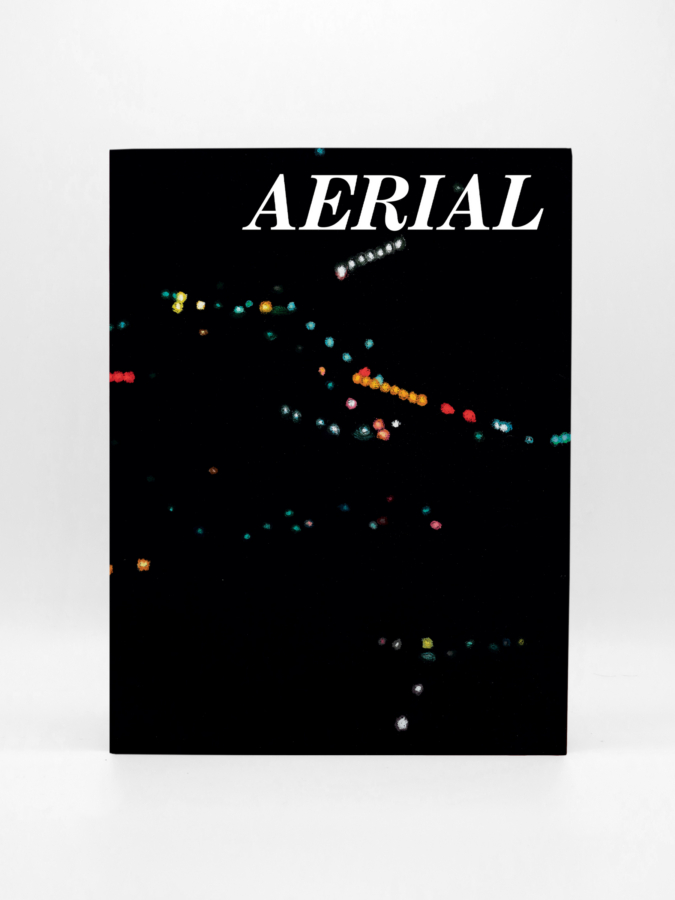
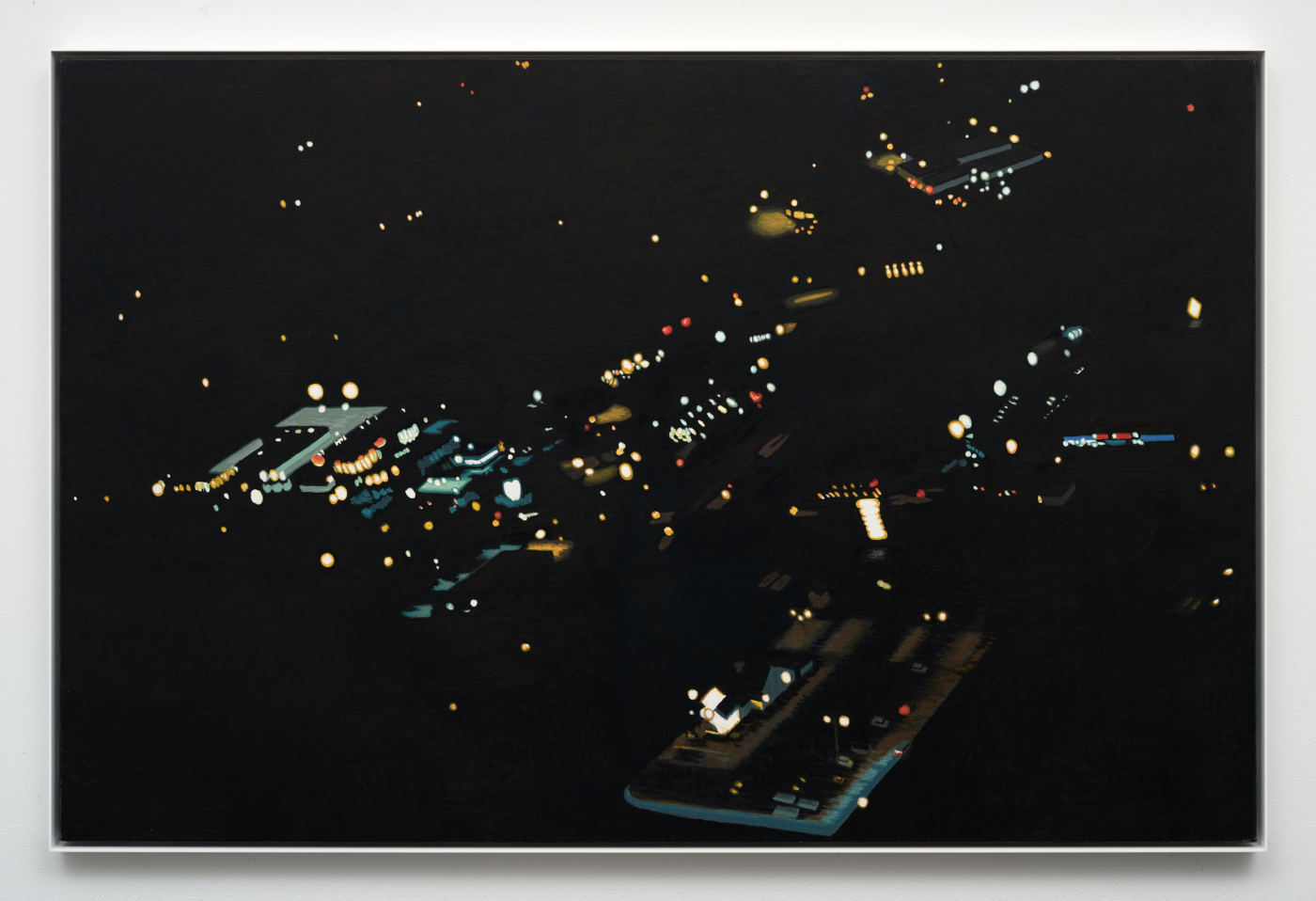
Her night scenes from Maine are some of her most incongruously beautiful — nocturnes for parking lots and highway traffic. She rendered a Walmart in the city of Augusta in striations of diffuse color, asphalt rippling like Impressionistic tributaries, as if Seurat painted strip malls. “Route One, Maine” (2008), the sparest picture here, is miraculous in its geometric economy. It’s just a scattering of dashes and haloed orbs sunk into an inky ground, yet there’s no question what we’re looking at, the information tapped out in luminous morse code. Its tilt suggests takeoff, hurtling away from the earth — a certain psychic freedom. “Trouble in the air is very rare,” Amelia Earhart noted. “It is hitting the ground that causes it.”