November 12, 2026
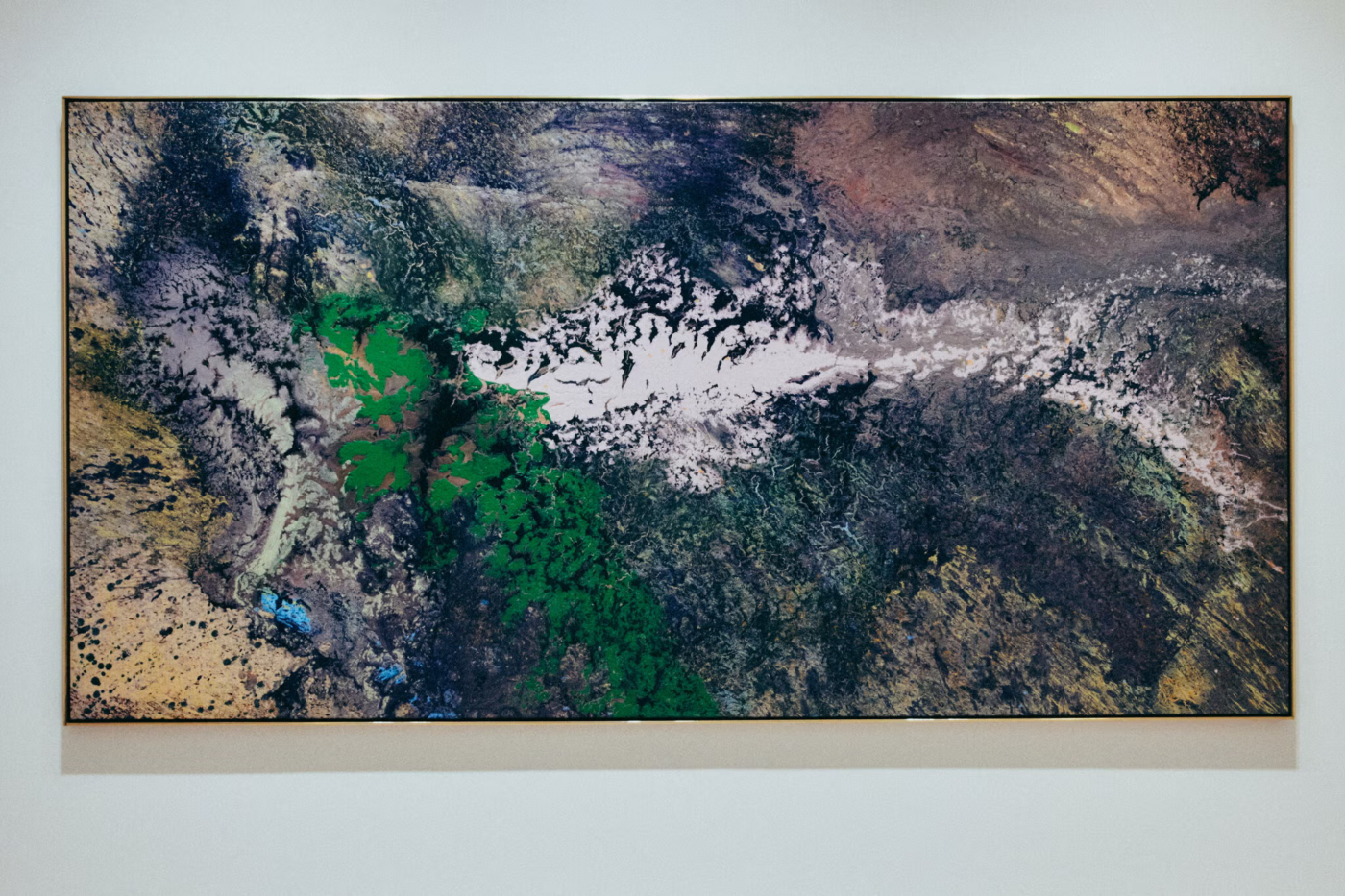
The show called “Hard Art,” at MoMA PS1 in Long Island City, is a survey of abstract work by more than 40 Black artists from 1969 to today — a substantial tasting-menu of material that is still, after years of sporadic exposure, far less well known to us than it should be.
For many in the art world in the civil rights era and beyond, “Black” and “Abstract” just didn’t jibe. A common assumption was that advanced new Black art had to be political in a clearly readable — usually meaning figurative — way, and because of that, abstraction, by definition, didn’t qualify.
But some Black artists chafed at such requirements and definitions. And so, a small succession of roundups underlining the theme of abstraction have cropped up over the past several decades. (One, titled “Afro-American Abstraction,” appeared at P.S. 1 itself in 1980, long before the raw, former art center was absorbed into the Museum of Modern Art.)
The New York-based abstract painter Peter Bradley organized one. Affiliated in the 1960s with the well-established, mostly white Color Field movement — which included the painter Kenneth Noland, a friend, and the critic Clement Greenberg, a supporter — Bradley, in 1971, in the rehabbed DeLuxe Theater in a predominantly Black neighborhood in Houston, Texas, curated one of the country’s earliest known interracial exhibitions of contemporary abstract work.
In a later interview, Bradley said that in choosing participants for the exhibition, called “The De Luxe Show,” his basic criterion was simply: “Anyone who was painting and making good, hard abstraction. When I say the word ‘hard,’ I mean artists who were making abstract art and who had suffered to make it; living in poverty and so forth — Black and white artists alike.”
Of the 18 artists he picked (in addition to himself), half were white, half were Black. All were contemporaries in age and length of career. But while many of the white artists had gained mainstream market status, most of the Black artists — Ed Clark, Sam Gilliam, Richard Hunt, Virginia Jaramillo, Daniel LaRue Johnson, Al Loving, Joe Overstreet, and William T. Williams — were still on the market’s fringes.
As always, Hammons keeps your head spinning. You see two small, brushy circa-1965 paintings by him high on a wall; they could be post-Ab-Ex pictures by almost anyone, but they’re done in darked-down Pan-African colors: Right below them stands a wild 1992 floor sculpture, a plant, or creature, sprouting wire antennae coated with hair collected in Harlem barber shops. And then that there’s that big, covered-up 2017 piece, which I take as a backhanded homage — tribute and sendup — to abstraction itself.
I read much of Hammons’s art as complicatedly political in this way. Work by certain younger artists in the show is more directly critical: Hannah Black’s 2023 graffiti-style paintings using spray paint, referring to broken-windows policing; SoiL Thornton’s 2026 image of the American flag as an air mattress swollen to the point of near-explosion. Others follow Hammons’s lead, as Eric N. Mack does in a 2015 assemblage called “Tent,” a walk-in enclosure of castoff quilts and blankets that brings to mind both nomadic cultures and homeless encampments.
References to Blackness, as an identity and a history, are everywhere, often conveyed in titles. Mary Lovelace O’Neal called a mural-scale all-black painting, in which she used lampblack — soot — as her only pigment, “Blacker Than a Hundred Midnights Down in a Cypress Swamp,” quoting from a poem by the activist writer James Weldon Johnson. (O’Neal, who died this year at 84, has a splendid solo show at Boesky Gallery in Chelsea through Dec. 19.)
The name that Melvin Edwards gave to a multipart abstract steel sculpture, “Homage to the Poet Léon-Gontran Damas,” is a bow to a French Guianese writer who was one of the founders of the Negritude literary movement and a friend of the artist, who also died this year at 88.
You might not deduce from its glitter-dusted surface alone that a 1980 collage painting by Howardena Pindell honors the Afro-Brazilian goddess of the sea, but for the title — “Feast Day of Iemanja II, December 31.” (This piece, along with Edwards’s, is one of several in “Hard Art” that were also in the 1980 P.S. 1 exhibition.)
Nor might you know at a glance that Nikita Gale’s eye-zapping 2020 light show of an installation is a shout-out to another deity, though the title, “Private Dancer,” gives a clue: The flashing and swiveling lamps are synced to the recorded beat, here kept silent, of the eponymous 1984 Tina Turner album.
But not everything here has, or needs, an explanatory backstory. Certain pieces seem to have been chosen to deliver a hit of pure beauty and they do.Richard Hunt’s 1962 “Linear Peregrination,” a welded steel drawing-in-space of embodied velocity, is one.
There’s work that valuably points up the sheer breadth of abstraction’s formal possibilities. The black-and-white video titled “Landscape (Western Hemisphere)” by Lorraine O’Grady, which could be easily taken for a panning view of wind-whipped trees or a roiling sea, is actually a close-up shot of the artist’s hair stirred by fans.
The floor sculpture called “Water Composition (Green)” by Senga Nengudi is composed of colored water sealed in flexible clear plastic containers. It was conceived in 1970 as an interactive piece, with viewers invited to lift and manipulate it, thus giving abstraction a performative dimension (the version in “Hard Art” is stationary).
Language as imagery, at once concrete and abstract, is everywhere here, delivered in sometimes surprising ways. Maren Hassinger’s wall hanging called “The Veil Between Us” looks to be composed of thousands of loose and invitingly soft strands of African raffia, though it turns out that each strand is dense with newsprint because all are made from twisted and knotted cuttings from The New York Times.
The very existence of an exhibition devoted to “Black abstraction,” of course, raises questions, always has. The big one being: Is it useful, or even valid, to continue to sort art by identity? On the evidence of “Hard Art” — organized by MoMA PS1’s director, Connie Butler, with Sheldon Gooch, a curatorial associate, and June Kitahara, a research assistant — it is.
The artist Jack Whitten, who was in “Afro-American Abstraction” in 1980 — a show that was criticized for narrowly defining Blackness by an emphasis on African elements in the art chosen — wrote that that exhibition “really taught me a lesson. My work cannot be shown under these circumstances. I knew that already but I continue to exhibit with Black shows for political reasons. I can never expect anything from such shows. My work does not fit into the present category of Black art.”
Whitten (1939-2018), the subject of a universally lauded MoMA retrospective last year, is in “Hard Art,” and would, I suspect, have felt OK here. This would not just be for political reasons, though he would certainly have understood the need for identity-based solidarity at a time when African American history and culture is under active suppression. But he would also see how the hard-won expansion of the category “Black Art” has crucially shaped the category of “American art”— and continues to do so.