March 12, 2026
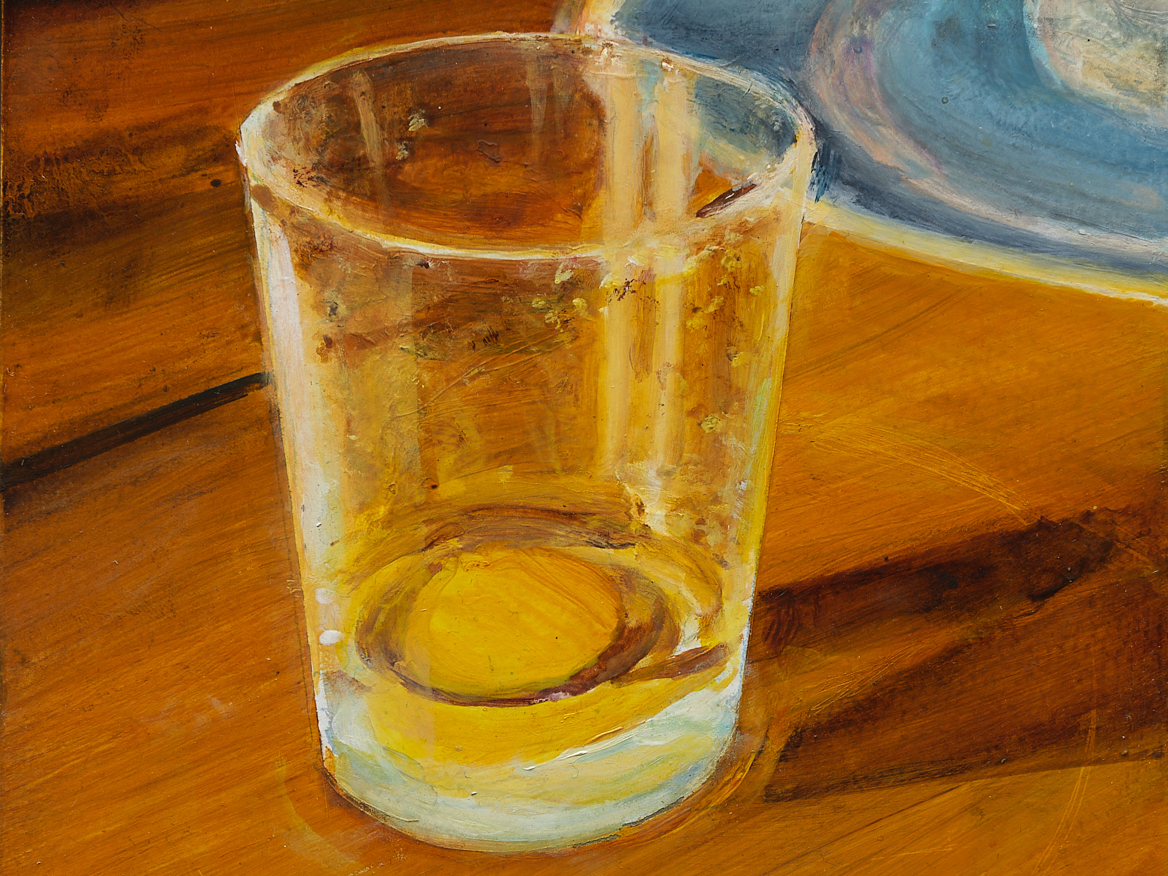
The pleasure of a Dike Blair picture is in its economy. Its focus is on one thing, maybe two: a sweating cocktail, a porcelain coffee cup. Its subject is specific, and its space is shallow. The banal bubbles up with deadpan devotion. Blair’s gaze rarely escapes hermetic spaces — airport bars, vacant apartments, hotel rooms: plein-air observational studies, minus the air.
Because Blair paints from his own photographs, his pictures have a loose relationship with time. They’re diaristic but invented, their contents pared back to satisfy the composition, relating to a definite moment but absent its realness. It’s tempting to view Blair’s paintings as ironic, a kind of post-post-postmodernism (there are four images of unfinished drywall). But they’re Zen in their earnestness, an acknowledgment of the existential experience inseparable from mundanity.
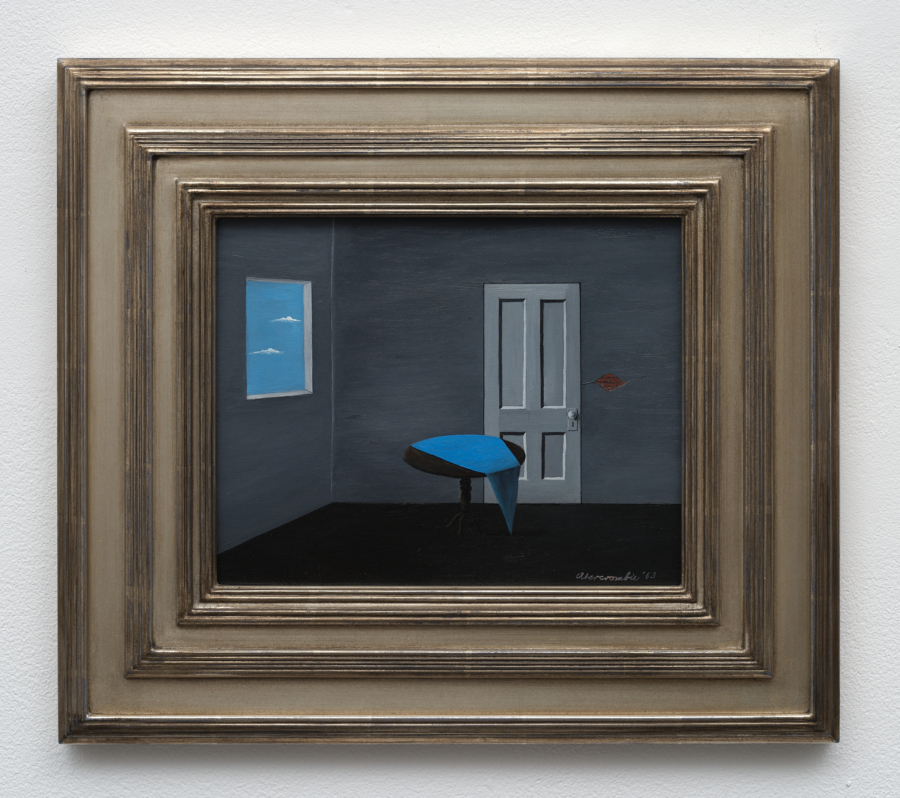
Still, there’s room for jokes. Blair’s wry humor seeps in, like condensation inside a medicine cabinet. In his paintings of other paintings, Blair lavishes more attention on the frames and their shadows than on the canvases. Art historical homages may be better found in other pictures: the faux marble of an elevator cab is rendered as sumptuously as a Bernini; the white-on-white geometry of a flat door against a blank wall as irreducible as a Robert Ryman painting.
These are solitary pictures, though they are not lonely. Figures never enter, but rather than ennui, the unpunctured stillness suggests psychic satisfaction. The real trick of a Blair picture is being able to find peace anywhere, even in drywall.