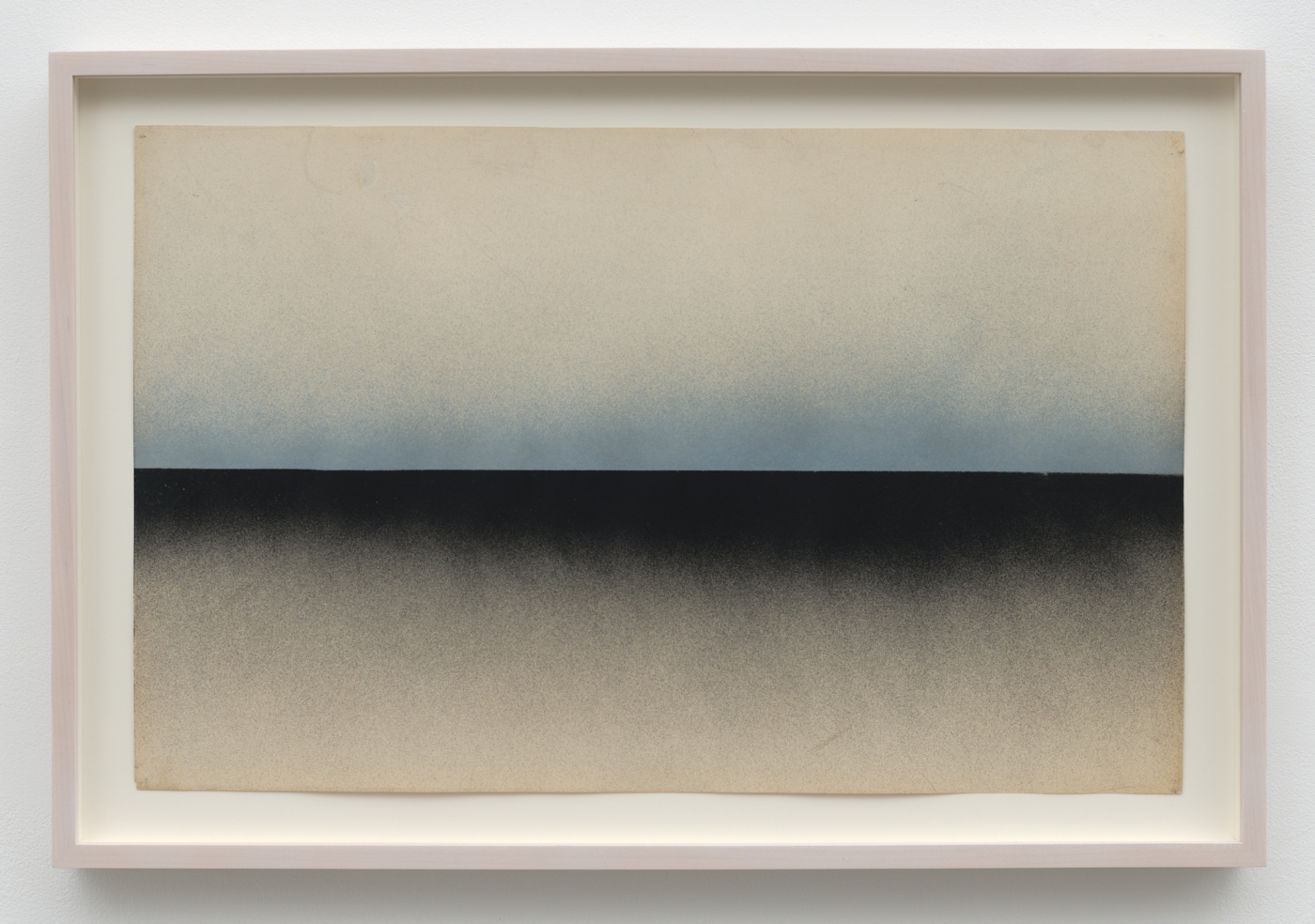
A Conversation on Bill Bollinger
with Mitchell Algus, Win McCarthy, Paul Mogensen, and Brandon Ndife, moderated by Matilde Guidelli-Guidi
Saturday, February 7, 2 pm
Karma
188 East 2nd Street
New York
Mitchell Algus is an American gallerist and curator best known for founding Mitchell Algus Gallery, which he established in New York in the early 1990s. The gallery has been widely recognized for its rigorous, research-driven program and its early advocacy for historically underrecognized artists, including Lee Lozano, Judith Bernstein, Betty Tompkins, Barkley L. Hendricks, and Robert Mallary. Algus holds a PhD in physical geography from McGill University in Montreal.
Matilde Guidelli-Guidi is a curator and co-head of the curatorial department at Dia Art Foundation, where she has organized exhibitions of work by Duane Linklater, Senga Nengudi, Cameron Rowland, Kishio Suga, Meg Webster, and Jack Whitten, among others, and edited the publications Artists on Agnes Martin (2026), Senga Nengudi: Populated Air (2025), Jack Whitten: The Greek Alphabet Paintings (2023), and An Introduction to Dia’s Locations and Sites (2021), . She is responsible for overseeing Dia’s permanently sited works by Walter De Maria, Max Neuhaus, and Joseph Beuys, and as the organizer of the Artists on Artists Lecture Series, she commissions a growing roster of contemporary artists to respond to their peers and Dia’s institutional history. Her upcoming projects include exhibitions of work by Alighiero Boetti, Richard Tuttle, Walter De Maria, and Éliane Radigue. She lives in New York.
Win McCarthy is a Brooklyn-based artist known for sculpture, installation, and works combining photography and text. His work often reflects on urban life, architecture, real estate, technology, and their relationship to contemporary subjectivity. McCarthy has exhibited at galleries internationally as well as institutions including Kunst-Werke Berlin; Vleeshal, Middelburg, Netherlands; Whitney Museum of American Art, New York; and SculptureCenter, New York.
Paul Mogensen is a New York–based painter who has often been associated with Minimalism, although his mathematical, progressional work resists categorization. Rather than reproducing the reductive geometric abstractions of his Minimalist contemporaries, Mogensen uses an iterative format to activate the picture plane. His paintings are meant to be deciphered rather than easily comprehended: often full of movement, they actively draw the eye across the canvas. Each painting is calibrated according to the rules of elemental mathematics, particularly those deriving from Renaissance and Ancient Egyptian theorems. Mogensen uses such arithmetic progressions to determine the sequence and size of each color form. The resultant morse code–like arrays are inspired by the universalist ideas of early twentieth century Russian artists and poets such as Vladimir Mayakovsky, Aleksander Rodchenko, and Vladimir Tatlin.
Brandon Ndife is an artist who lives in New York. His work is currently on view in the group exhibition A Garden of Promise and Dissent at the Aldrich Contemporary Art Museum in Ridgefield, Connecticut. Ndife’s sculptures fuse forms that resemble domestic objects with elements derived from the natural world. Through hand-building, painting, and casting in synthetic resin or polyurethane foam, Ndife creates meticulous replicas that keep the readymade tradition at a subtle remove. He is drawn to domestic items, in part, for their capacity to index American life under capitalism—wrought with racial, class, and now ecological disparities in all that we touch. In his assemblages, wild growth seems poised to overtake the built environment, with all its structural exclusions. For him, the works “operate as portals that get us thinking about objects that are larger than our systems, larger than ourselves.”