March 18, 2026
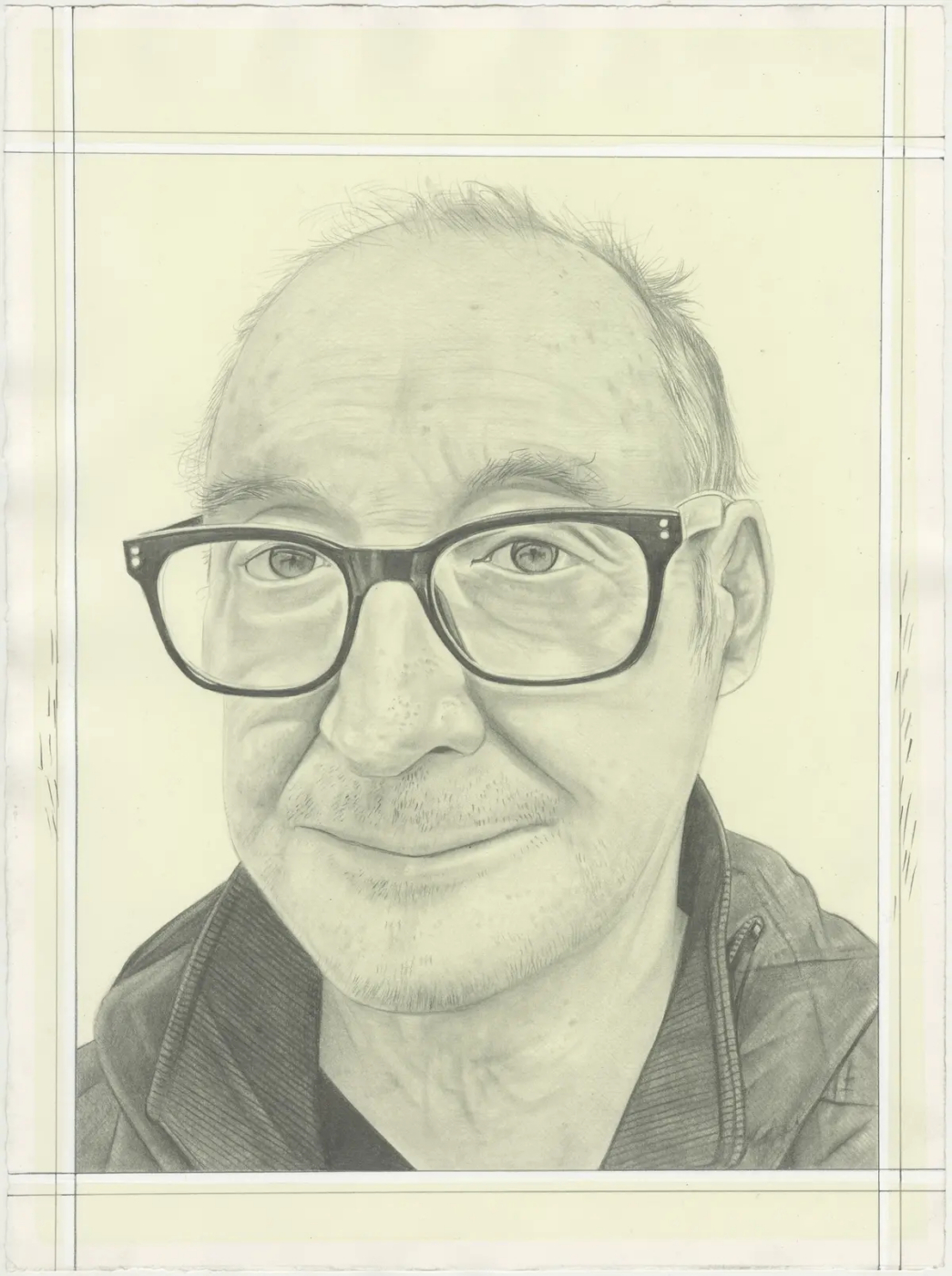
Although he now lives mainly in rural upstate New York, Dike Blair’s art is thoroughly cosmopolitan—deeply informed, intensely considered, and visually impeccable. In a career that spans more than forty years, he began by producing videos, performances, and then installations, including one that invoked a chilly corporate interior. Blair started painting in the early 1980s, at first as an occasional, weekend-and-travel practice, creating images of landscapes made en plein air and from memory; soon, he began working from photos. The early paintings were done in gouache, but for the past ten years oil has predominated. Slowly, the work warmed up. Objects, interiors, and landscapes, often ravishing, still prevail. People are rare; personal expression is resisted. Working at small scale, Blair attends closely to relations among his paintings, sequencing them in what he sees as snippets of conversation rather than extended narratives. Luminism was an early love, and rendering various kinds of illumination, much of it artificial, remains important, as does the language of photography and film. Television monitors appear in some paintings.
We met for a conversation on a cold January day in a backroom at Karma’s new Chelsea gallery, where the paintings for his current exhibition were temporarily hung, aptly enough, on sliding screens.
Nancy Princenthal (Rail): We’ve begun by talking about surfaces.
Dike Blair: Yes, we were talking about aluminum—that’s something I took up to avoid warpage. And I was describing the irony of painting on an absolutely rigid, smooth surface, and then trying to make small, select areas look like canvas. I have a technique of combing paint through canvas to make a texture that is, in fact, like canvas.
Rail: The levels of illusionism are multiplying. There’s the look of a canvas surface on aluminum, and of course, the compound illusionism of the images. One painting is of a TV screen mounted high on the wall in a bar, showing Bugs Bunny in a pretty manic moment.
Blair: Not that there’s any reason you should be able to distinguish between Babs Bunny and Bugs Bunny, but that’s Babs.
Rail: Oh, sorry. I missed that. She’s pink.
Blair: She’s with Playboy Penguin, Jr. and the Little Beeper, who is a junior Road Runner. They’re from Tiny Toons Looniversity. There are all these universes of things that I grew up with that have evolved for today’s kids. There is a related painting showing the same bar, with La Dolce Vita on the TV. That’s Marcello Mastroianni on the screen. It was a bar at LaGuardia Airport that I think was called the “Cinema Café” or something. It no longer exists.
Rail: So you are working from photographs.
Blair: From my photos, yes. I edit them; there was the possibility of both these screens being in one painting. But I didn’t want to set up a narrative—particularly the elements of time and cartoons and foreign and domestic films and blah, blah. I didn’t want that kind of narrative to happen. I wanted the paintings to be a little more mute.
Rail: But all that is still in there, to some extent. One of the questions I had, which you’ve now sort of answered in the negative, is whether there’s meant to be a sense of narrative—even of pages in a book. This was when I was seeing them as thumbnails and picturing smaller differences in scale. Actually, there is quite a variety of sizes; also some of them are vertical and some seem square or near square.
Blair: They’re all rectangles, and they’re mostly verticals, with some horizontals. Their size ranges from 8 by 6 inches to 22 ½ by 30 inches. And this will be interesting to see in installation. I was aware that this whole body of work was going to be in this big, newish Karma space, and I was hyper-aware that even the teeny paintings had to be able to carry a lot of space.
Rail: Here we’re seeing them all ganged together on storage screens. What I started to say about these two paintings of monitors—the two TVs that we’re looking at—is that I can’t help seeing them as sequenced, forming a kind of rebus, or of a narrative in increments. I read that you have an interest in traditional plot-based fiction.
Blair: Oh yeah, very much, because that’s what I listen to as I’m painting these things. They’re not always the best novels—often they’re airport-type novels. I’ve never been able to really articulate how these paintings reflect the role that books and listening and reading play in my life, but it’s there.
Rail: I get a sense of the long form—of streams of narrative going from painting to painting, and also, at this point, from decade to decade, with some characters recurring. There’s the character that I took to belong to a noir-ish movie, which, of course, it’s not. It’s La Dolce Vita. But it’s a man seen from the back, rather mysterious, looking through a window. We don’t see what he’s seeing. It’s all very opaque out there. Mistaking the bunny for Bugs allowed me to think, “Oh, Bugs Bunny. That must derive from some gangster character, right?” But it also is a juxtaposition that takes us across personal time, from kid stuff to an airport bar, which is a favorite kind of milieu for your paintings.
Blair: To rewind back to the idea that these paintings have to really hold a lot of their own space in a big gallery: I didn’t let any of these out of my studio all year, so they were all in conversation. For me, “conversation” is a better description than “narrative,” but I’m splitting hairs.
Rail: Another kind of conversation may be happening with this painting of flowered wallpaper.
Blair: That’s from a picture that I took in the nineties, on film, of a wallpaper in Nevers, France. I could never make it work. I tried it in photomontages, and it didn’t work, so I said, “Okay, just paint it,” and it fell flat again. I added the fly later, and that animated the painting.
Rail: There’s also a glow at the center, which suggests we might really be in a garden with sunlight. Another kind of illusionism. And I was thinking—you’ve done a series of paintings in relation to Edward Hopper, and also a couple showing parts of Piet Mondrian paintings. I wondered whether this wallpaper might be in a dialogue with Catherine Murphy.
Blair: I greatly admire Catherine Murphy, although I didn’t think of her in this context. There’s very often an artist that, as I’m developing these paintings, I say, “Oh, this echoes with so-and-so.” There’s a Pierre Bonnard painting that you can see in one painting of a table setting which starts having a conversation with these other paintings of table settings. With the sheetrock and light switch, I couldn’t not think of Cy Twombly. I was in Italy for a while, and Italian artists are always looking at these decrepit walls, and it influences the surfaces of their paintings. And you know, sheetrock is what we cut our teeth on and lived around when we were starting out and doing loft renovations. Again, that was not something I started with—the attraction comes first, and then thinking about sheetrock comes later.
Rail: The room you painted looks like it’s being washed with natural light, although we see no windows.
Blair: Yes, the light is coming through an unseen patio door. As I’m painting this, I’m also thinking of that Gustave Caillebotte painting where the workers are planing a floor. That is such a fantastic painting. I think about it a lot. I think of floors, and also matte and gloss finishes. I think the finished floor has a little bit more sheen than the planed floor, but that may be more illusionistic than actual.
Rail: Bonnard maybe isn’t the first person I would have thought of in relation to your work, but I see the connection in the images of flowers.
Rail: And Mondrian?
Blair: Those two paintings of Mondrian paintings stirred up thinking on boxes and rectangles. I had done a couple of shows with vanishing points and skies, and the Hopper show, which had traditional perspectives. The Mondrians made me start thinking about the inside of the box.
Rail: This bit of Mondrian—where you see surface cracks and the shadows of its very elaborate frame—is really quite exceptionally convincing as a three-dimensional object. But you’ve got these pools that are so extraordinarily unreal.
Blair: Of course with the Mondrian, there’s the irony of painting something completely non- objective in a highly illusionistic style.
Rail: Yes. And there’s what looks like an indoor pool, of the most artificial-seeming blue, and a lime Jell-O one.
Blair: Both of these are Luis Barragàn pools in Mexico City. The green one is from Casa Pedregal, which is in this development he did when he shifted from being a real estate developer to becoming an architect. They haven’t maintained it at all. That was one of his very first. The blue one is in one of his last. It’s the Gilardi House that he did under the influence of Emilio Ambasz, who was trying to get him a show at the Museum of Modern Art. It was his ticket into that retrospective at MoMA. The green pool is funky and rough and Anselm Kiefer-esque, and the blue one pretty slick and Gerhard Richter-esque.
Rail: The Pedregal is a wonderful lurid green, a slightly toxic color.
Blair: Like antifreeze or something.
Rail: Antifreeze, perfect. Neither of the pools looks exactly natural, right? That seems to be something you play with. I’m thinking of your Gloucester paintings, where light is never or rarely fully natural. It’s often nighttime, and we’re seeing things in halogen light or another kind of nighttime, streetlamp light. There’s the idea of light pollution, but also the light itself looks slightly toxic.
Blair: Sometimes it’s even a flash bulb. I think an awful lot about luminism and how to paint light. Painting different kinds of light is something that I get a lot of pleasure from.
Rail: You’ve painted a lot of glasses, mixing up—in what seems a deliberate way—drinking glasses and eyeglasses. I think there is one where they are together, and then there is one of eyeglasses upside down on what seems to be a wooden table, or a deck. It actually looks like there is light emanating from the eyeglasses. Is there a pun there, with the two kinds of glasses?
Blair: I really like to drink. So they have strong connections.
Rail: And they both alter the way you see things, right? [Laughter]
Blair: Yes. But, I wasn’t consciously punning or anything.
Rail: Of course, they’re both made out of glass. And in a very local way, they do slightly warp whatever is behind them.
Blair: I’m painting a lot fewer cocktails, because I feel it’s become too much of a cliché.
Rail: But they’re beautiful, and they do something. They offer the possibility of cheer.
Blair: Well, and escape. Escape is something I do seek, and pleasure. Almost everything here has got something to do with pleasure. I paint because it pleases me. I was thinking the other day about interviewing Paco Underhill, a “retail anthropologist” who addresses why we buy things. He said people buy out of attraction and seduction and rationalize the purchase later: “I love the way that new car looks and I want it. So I tell myself it’s a smart car for me to buy, because it gets better mileage than the one I’m driving.” And that’s not unlike what happens to me with painting. I see something like, “Oh, I love my reading light.” And then afterwards, I can insert it into the conversation, and I can use it metaphorically. I also am attracted to the challenge of figuring out how I’d paint something.
Rail: There is so much delight in looking at them. And there’s also a kind of latent humor. There are hardly any people, apart from people on screens. But there are these conversations with lamps that I think are very funny. Like this gooseneck lamp that is looking at the switch that turns it on. And this lamp in twilight in front of a window which is reflecting it. There is a lamp that has a shade that not only looks like a shade, but if you touch it, it feels like a shade. That’s another thing that makes me think of these as episodic, but ultimately plot-driven narratives. Although they could be mixed up.
Blair: Well, one of the things that excites me a little bit is that you can shuffle sets of them. These are all in one conversation, but you can change that conversation slightly and include some of those paintings, but not others. That was one of the pleasures of sitting with this work for a year. Let’s say these three paintings might yield an idea or remind me of another image I might want to paint.
Rail: Were the images that will be in this show conceived as a discrete body of work, or is it more ongoing?
Blair: It’s part of what I’ve been doing for a number of years, and will continue, I hope. But usually I work on little sets of, say, four to six paintings at a time. Usually that selection comes from choosing images which require different techniques and scales, so I don’t bore myself.
Rail: You’ve said before that irony was sort of inescapable for artists of our generation—for somebody who came out of, say, the Whitney Independent Study Program and had a conceptual basis in at least part of their education. Maybe we could talk a little about the choice of becoming a painter?
Blair: I tried so many different hats on, a lot of which you can find traces of. But this kind of painting—and at this point I’ve done over four decades of it—really started as my Sunday painting. This was just stuff I was curious about, because it felt a little bit wrong, and then it kept growing, and then ultimately eclipsed some of my other pursuits—sculpture especially. But sculpture I put down in large part because it became physically a little too challenging for me to work with, and it’s also challenging to store it and sell it. You know, all these practical things.
Rail: So there are no installations in your future?
Blair: The last one I did was at the Secession in Vienna in 2016. But all of these little surfacey things—or little techniques in the paintings—are sort of micro versions of things that I did with the sculpture.
Rail: Do you mean that in the sense of placement, or the specificity of the objects that you’re choosing?
Blair: The sculptures had a lot of paint on them, and I used directional sprays, so they were somewhat illusionistic. I liked that the concreteness of the abstract sculptures were paradoxically illusionistic. And conversely, the paintings employ illusionism, which is a very abstract notion.
Rail: Some of these conversations seem to be about illumination and outlets for illumination—sockets, electrical switches, and also surface patterns vaguely suggesting vegetation, like the veined green marble in what looks like the inside of an elevator.
Blair: It is an elevator to my dentist office. [Laughter]
Rail: So that’s why it’s slightly grim! You know, it’s beautiful, it’s polished. It’s meant to be elegant. It’s dark, a little scary, and it’s a little like a false landscape. Surfaces and images that are not quite what they seem are a recurring aspect of what you do. In an interview with Steel Stillman, you talked about televisual light and filmic light, and how that comes into even the paintings of the landscape. Can you expand on that a little?
Blair: I used to use film and paint still lifes from studio setups that I’d illuminate myself. I’d sometimes use lighting gels. Then I decided that that much manipulation may not be necessary. Just take a snapshot. And why not use a flash? Then digital happened, and then the iPhone happened. Despite the fact that I’m certainly not a photorealist, the manner of the photo does necessarily enter the painting, even though I’m not painting a photograph.
Rail: You mean you’re adapting the photograph—you’re not painting it straight?
Blair: I play with things, but not drastically, and I’m more likely to leave things out than to add things—for instance, in that wallpaper painting that I added a fly to. But I don’t really think of it as always about the question of the photograph. When I’m taking pictures, and when I’m painting things, I’m not painting a photograph. I’m there, as if I were there with a pencil and paper. All the sensations that I’m after are bodily experiences. Not the bodily experience of a photograph, but the bodily experience of sitting on a ferry boat or in a bar.
Rail: That’s a really interesting distinction.
Blair: Of course, the diaristic aspect of it is almost too obvious to be said. But they are diaristic.
Rail: In the sense of daily life: this is where I am, this is what I’m doing?
Blair: Yes, but also the travel. Initially, the paintings of paintings came from being a tourist. When you’re a tourist, you go to museums and look at paintings much more than you do when you’re at home in New York. So I started to think, “Well, as long as I’m going to bars and painting cocktails, and I’m going to museums to look at paintings, why not do paintings of paintings?” They’re almost always homages; they’re not critiques in any way.
Rail: As you were saying that, I was readjusting my thinking about your friendship with Richard Prince. His appropriation work, and his engagement with the “image world” and the glut of commercial imagery: that’s not where your present work is, even if, especially earlier in your career, there was—again, inevitably, for generational reasons—a link to it. There was a lot of lounge-lizard stuff. I think also that you were associated with artists like Steve Keister and Nancy Arlen and a short-lived Canal Street aesthetic of neon-colored acrylics. Is that part of your DNA?
Blair: I was tangential to that. But I like so many different kinds of art. Take Richard: I admire him. He’s a great artist. You know, we both smoked Marlboro cigarettes, and he did the spectacular, huge Marlboro Man series that addressed the whole culture; I was sitting at a little desk doing a delicately lit pack of Marlboros. The difference is just so self-evident.
Rail: Of course, Richard Prince’s work has been susceptible to charges of a certain kind of snarkiness, and also—to face the matter head-on—misogyny. You had a little dalliance with that, in your paintings of strippers. Do you want to talk about that at all? In the sense that a sort of irony and wit can also seem to shade into a certain kind of darkness. Admittedly, that work was a long time ago.
Blair: Well, it was also very transitional. I’ve only gone to the figure when I’ve been stumped. In 1991, I did an installation I thought was actually good about the EPCOT center—there were large glass photo pieces inside a Disney-esque pavilion, and I thought it was one of my strongest shows. Then the gallery closed, and I was somewhat lost. I went to the figure; in this case, I went to strippers and made a strip club simulacrum to house them. Back then, I defended the piece by noting that strippers are self-objectifying. So for me, it was more like painting still lifes than anything psychological. It wasn’t a great show. In fact I did three installation shows in the early nineties that I thought were “clever.” Clever is not my strong suit. Fifteen years later I got stuck again, and that’s when I started painting women’s eyes. Whenever I’m not finding it, I do the hardest thing for me to do, which is people. I’m going to show a bunch of those eyes at Catskill Art Space this summer.
Rail: To go back to the beginning: you grew up in New Castle, Pennsylvania; your mother was a painter; and you were really talented. Your parents thought you could be a court sketch artist, which I think is very sweet.
Blair: They were supportive, yeah.
Rail: What kind of painter was your mother?
Blair: She was regional, and she was good. Landscapes, still lifes, and stone sculpture. Actually, not unlike what I do, and my appreciation of what she did has grown with time. I have a feeling that if she’d been in a community where she was in greater dialogue with other artists, her work would have prospered.
Rail: Is New Castle a small town?
Blair: I think it’s more of a small city. Now it has a population of about twenty thousand: about half of what it was when I grew up there. It is also the hometown of the sculptor Thaddeus Mosley, who shows here at Karma. This guy is a genius. He lives and works in Pittsburgh. Last year he did an installation of bronze sculptures in City Hall Park. He’s remarkable; he’s ninety-nine years old. He’s going to do a show of small glass sculptures at Karma alongside my show. I really think he’s a giant. But that’s because he is from New Castle. [Laughter]
Rail: Going back to sketch artists: that implies skill and speed. Are you a fast painter?
Blair: I paint pretty slowly. I started drawing again, and part of that was that I can do a drawing in a couple of hours, and that’s not the case with the oils. I used to paint mostly in gouache, now mostly in oil. One thing I love about gouache is that it dries quickly on paper. Each oil painting takes a different amount of time, but none of them are terribly fast, and I work on a half a dozen or so at a time. Because of the time they take to dry, I really have to teach myself to be patient; it’s so tempting to touch something, and then you set yourself back two days.
Rail: Yeah, patience is a discipline, especially if you’ve got that kind of facility. Being really skilled can sometimes be a handicap. Do you find yourself working against that—setting up obstacles?
Blair: I really never particularly thought of myself as skilled. Every time I start, I think, “Can I do that? Not sure. Can I pull that off?” I’m sure you do the same thing in writing, like, “that paragraph—I don’t think I can ever get that paragraph right.”
Rail: Yeah, less and less can I get that paragraph right!
Blair: But yeah, it’s never not a huge challenge.
Rail: It looks like it was done with great confidence.
Blair: You’ve got to make it look that way. I don’t think there’s any artist that doesn’t want it to look easy. The range in technique in these paintings is limited. But in all of them, there’s a way in which the painting starts to talk to itself and decides how it needs to be painted. The peony really had to be painted in with much more impasto than the other paintings. They lead themselves at some point.
Rail: It must feel fantastic when that happens. It’s a thing that people who write fiction talk about—that their characters, after a while, tell them what they want to do. And sometimes they’re surprised. Have you had that kind of surprise about the painting’s resolution?
Blair: I think not nearly as much as a writer would experience, or maybe other painters. Again, my parameters are kind of self-imposed before I pick up the brush. I print the image out and I live with it for at least two weeks before I consider starting it. Sometimes it’s not worth starting. And there’s the editorial process, like with an art editor, when I think, “Okay, this image goes with that image. And if you make it this size, you need one this other size.” That’s really where much of the creative stuff happens, as much as when the application of paint is happening. I think.
Rail: I have just a few more questions. I read that you had eye trouble when you were a kid and you had to train your eyes, which was probably a very uncomfortable process. But I also thought what a great metaphor—or maybe exercise—for becoming a painter, an artist.
Blair: It certainly had something to do with it. Probably also had something to do with why my mother and I didn’t get along, because she was the enforcer. But yeah, that was pretty constant. One of the exercises was that we had a polarized screen suction-cupped to the television, which at that point was black and white, and then I put on clip-on polarized glasses, and there was a little sliding gizmo. If you weren’t fusing with both eyes, one side of the screen would go black. If you’re watching The Lone Ranger, and it’s getting toward the end and starts to black out, it was just … my poor brother and sister weren’t allowed to complain about it, but you really don’t want to watch TV through a gray plastic screen.
Rail: And you also certainly don’t want to miss the end of the chase!
Blair: There was no rewind.
Rail: You had to see it in the moment.
Blair: Then there was another little bar that I held over the book when I was reading, so that my eyes would focus around the bar.
Rail: And it all succeeded.
Blair: Yeah. Subsequently, I had corrective surgery, but I used to have the proverbial Coke-bottle glasses.
Rail: My last question is about working in the city versus the country. You mostly paint upstate. Does that make a difference?
Blair: Well, we’ve been there almost twenty-five years. My Sullivan County studios were better than my studio here in the city. That’s really the main reason more work gets done up there. I’d spent summers up there all the time before my wife Marie retired, but with COVID and Marie retiring kind of at the same time, the city started to make much less sense. Subjects like the skies, in the last show at Karma, were all taken from right outside my studio. And the footprints in snow, those are all up there. So subjects occasionally reflect the city/country context, or there’ll be the paintings out of the cab window on 23rd Street. But I feel those would exist in some form. I don’t elevate one over the other.
Rail: You’re not still teaching, are you?
Blair: No, it’s been almost seven or eight years.
Rail: Do you miss it?
Blair: Well, the commute was pretty long.
Rail: It was RISD?
Blair: Yeah, it was a hard commute. You know, the one thing I miss is talking about art, which I don’t do with my peers. You talk about the art world; you don’t talk about art. I mean, I don’t with my peers. I know there are probably some sophisticates who read the Rail and talk about art all the time. [Laughter] So, yeah, that’s the only thing I miss.